
How to Light Palm Trees, Live Oaks, Pathways, and Patios
A great landscape lighting design doesn't treat every plant and structure the same way. Different features require different techniques, beam angles, and fixture placements. Here is the Legacy Lights guide to illuminating the most common landscape features in Charleston, SC.
Lighting Palm Trees
Palmettos and other palm varieties have narrow trunks and high, dense canopies. The goal is to highlight the textured bark and illuminate the underside of the fronds.
The Technique: Place a single, narrow-beam up-light (15 to 35 degrees) close to the base of the trunk, pointing almost straight up. This creates a dramatic grazing effect on the trunk and catches the canopy perfectly. Avoid wide-beam lights, as they will spill light into the night sky and wash out the effect.
Lighting Southern Live Oaks
Live oaks are massive, sprawling, and complex. A single light will never do justice to a mature oak tree.
The Technique: You need a multi-fixture approach. Use a wide-beam wash light (60 degrees) placed further back to capture the overall canopy. Then, place 2 or 3 up-lights closer to the trunk to highlight the main branches and the Spanish moss. For a truly magical effect, consider "moonlighting"—mounting down-lights high up in the branches to cast dappled shadows onto the lawn below.
Lighting Pathways and Sidewalks
Path lighting is essential for safety, but it's easy to overdo it. The biggest mistake homeowners make is lining their paths with lights that look like an airport runway.
The Technique: Stagger the lights in a zig-zag pattern rather than a straight line. Space them 8 to 10 feet apart so the pools of light gently overlap without creating a continuous bright strip. Always use fixtures with top shields to direct the light downward, preventing glare in the eyes of people walking by.
Lighting Patios and Decks
Your outdoor living space should be warm and inviting, not harshly lit like a security zone.
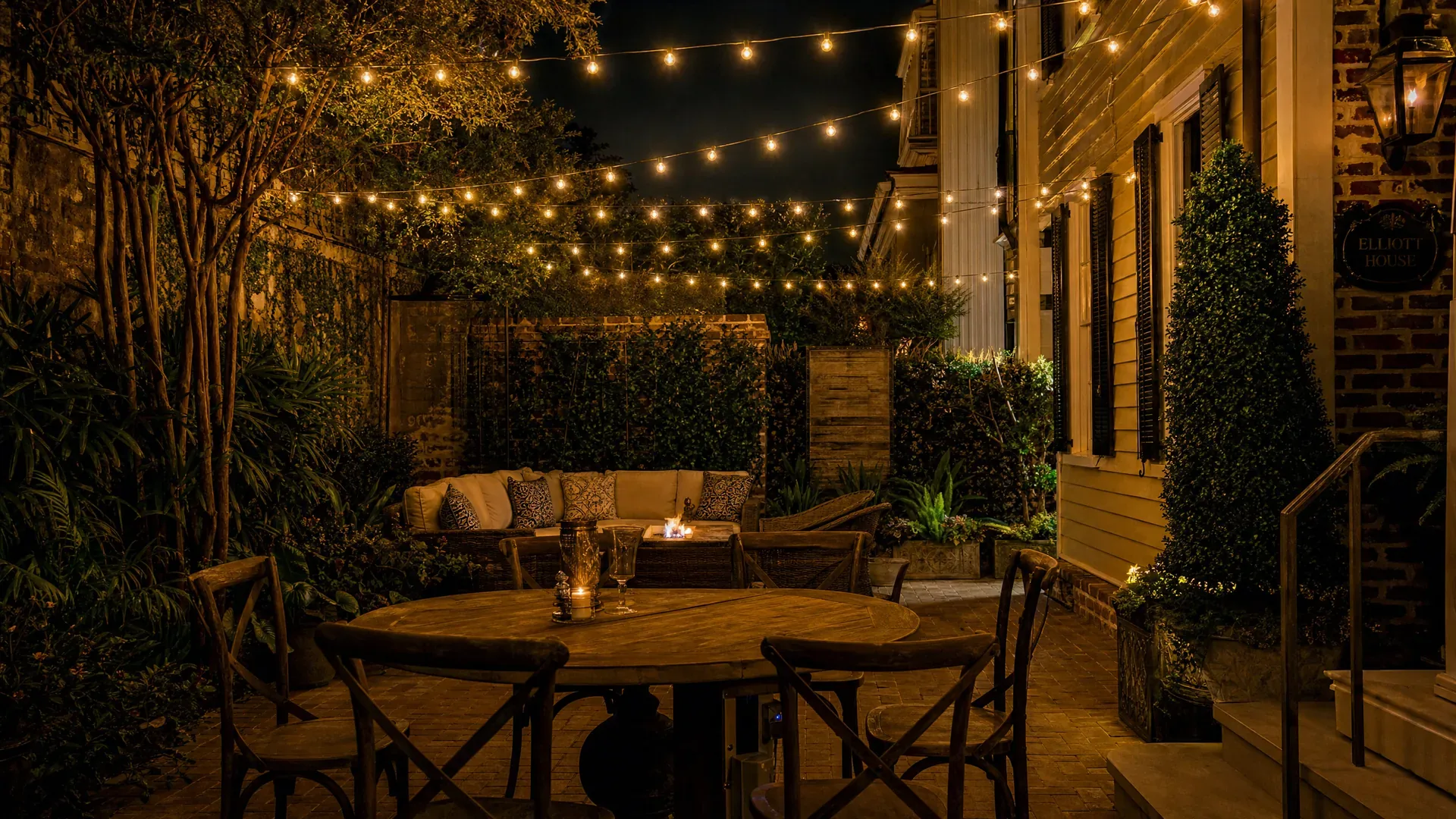
The Technique: Avoid bright floodlights. Instead, use soft under-cap lighting on seating walls and steps. For the main area, commercial-grade bistro string lights hung overhead create a festive, warm ambiance perfect for entertaining. If you have an outdoor kitchen or grill, use targeted task lighting that illuminates the cooking surface without blinding the chef.
The Importance of Color Temperature
For all of these features, color temperature is crucial. In residential landscaping, you should almost always use warm white LED bulbs (2700K). This temperature mimics the warm glow of traditional incandescent bulbs and makes foliage look lush and vibrant. Cooler temperatures (4000K+) look blue, artificial, and harsh.
Ready to Upgrade Your Home's Lighting?
Legacy Lights is Charleston's premier outdoor lighting company. We offer custom designs, premium brass fixtures, and a lifetime warranty.
Get Your Free Estimate